LED Light Therapy Colours Explained: Red, Blue, Green and Yellow Light
LED light therapy has moved from dermatology clinics into bathrooms around the world. But what does each colour actually do, and how do you get results at home? This guide explains the science in plain language, what you can realistically expect and how to fit LED into your routine.
Spavio AI editorial team6 min read
How LED light therapy works
LED devices shine low-energy light onto the skin at specific wavelengths, measured in nanometres (nm). Unlike sunlight or tanning lamps they emit no UV light, and they don't heat or damage the skin.
Different wavelengths reach different depths: shorter wavelengths such as blue act near the surface, while longer red and near-infrared wavelengths travel deeper. Skin cells absorb this light and use it as a gentle signal, which is why results build gradually with regular use rather than overnight.
Red light (around 630 nm)
Red light is the most researched colour for skin. It is associated with supporting the skin's own collagen production, which helps the look of fine lines, firmness and an even, rosy tone.
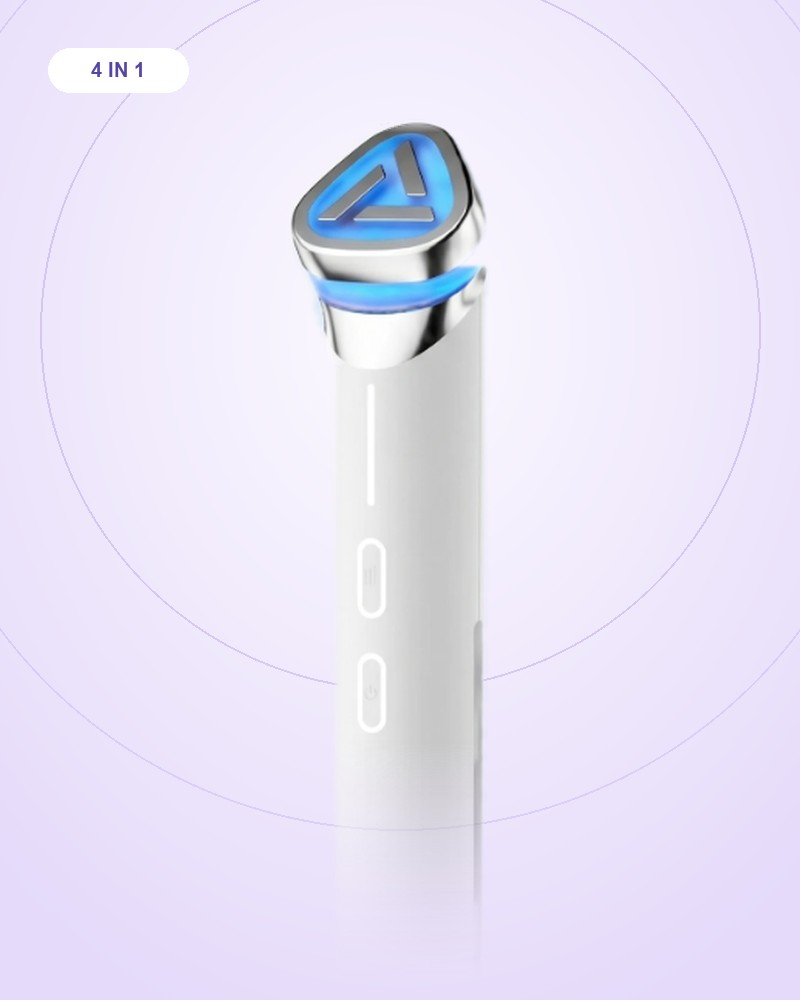
Near-infrared light (around 830 nm) is invisible to the eye and reaches a little deeper. Many masks, including the Lumina Pro LED Face Mask, combine red and near-infrared for this reason. In the Spavio Lumipore, red light is paired with gentle warmth in the Warmth mode.
Blue light (around 415 nm)
Blue light works at the surface of the skin. It is popular in routines for oily and blemish-prone skin because the bacteria involved in breakouts are sensitive to it.
In the Lumipore, blue light is combined with EMS pulses in the Micro-Lifting mode, for skin that looks firmer and more toned.
Green and yellow light
Green light (around 520 nm) and yellow light (around 590 nm) are less studied than red and blue, but they are widely used in aesthetic studios. Green light is used for uneven-looking tone, and yellow light for calming the look of redness and restoring radiance.
The Lumipore pairs green light with microcurrent in its Serum Boost mode to help serums and creams absorb, while its Glow mode uses yellow light to soothe.
How to use LED at home
Consistency matters far more than intensity. These habits help you get the most from every session:
- Start on clean, dry skin without makeup or SPF, which can block light.
- Aim for 3–5 sessions a week of around 10 minutes, or follow your device's timer.
- Close your eyes or use the supplied eye protection, especially with bright blue light.
- Apply serum and moisturiser after your session (or during it, if your device is designed for that).
- Give it 4–8 weeks of regular use before judging results, and take photos in the same light to compare.
Which LED device is right for you?
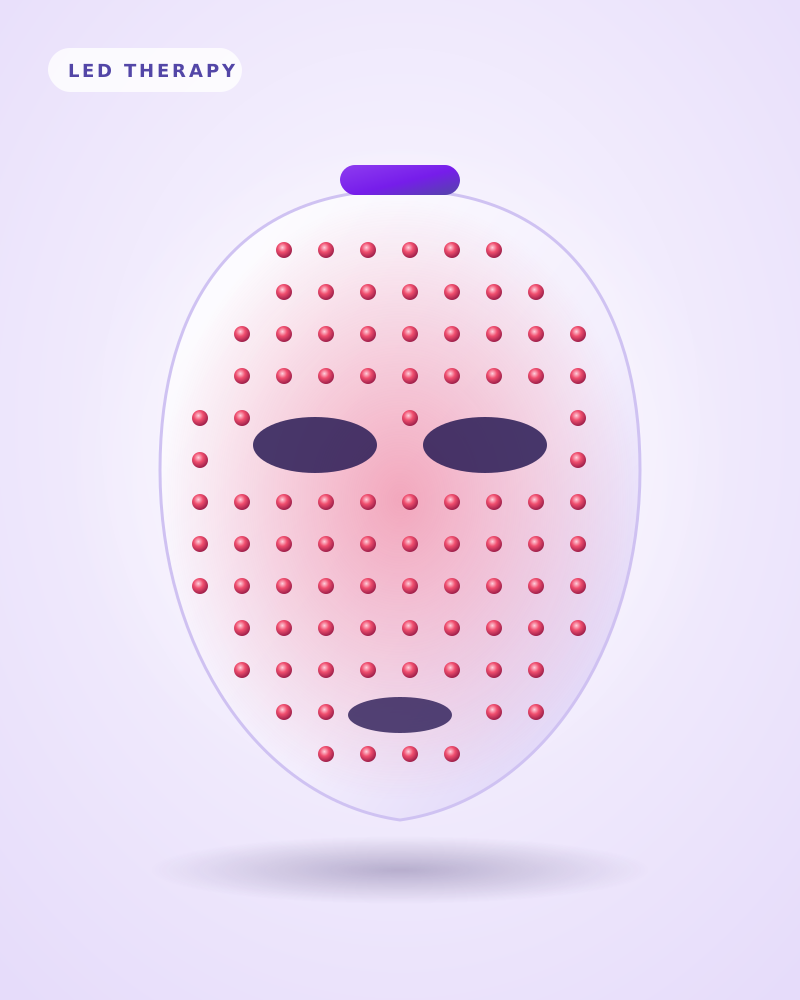
If you want a hands-free treatment for the whole face, a mask like the Lumina Pro is the easiest way to stay consistent: put it on, relax for ten minutes, done.
If you prefer targeted care and more than one technology, the Spavio Lumipore combines four light modes with warmth, microcurrent and EMS in a single handheld device — ideal for the jawline, cheeks and around the mouth.
Frequently asked questions
Is LED light therapy safe to use every day?
Cosmetic LED devices use low-energy light without UV, so daily use is generally fine for healthy skin. Most people get good results with 3–5 sessions a week. If you take medication that makes you sensitive to light, check with your doctor first.
Can I use LED light with retinol or acids?
Yes, for most people. Use LED on clean skin first and apply retinol or acid products afterwards. If your skin feels irritated, space them out and use LED on alternate evenings.
How long does it take to see results?
Some people notice a fresher, more even look after a few sessions, but changes in firmness and fine lines usually take 4–8 weeks of regular use.
Does LED light tan the skin?
No. LED beauty devices do not emit UV light, so they don't tan or burn the skin.
This guide is general information, not medical advice. Always follow your device's instructions. If you have a skin condition, are pregnant, take photosensitising medication or have an implant such as a pacemaker, talk to your doctor before using beauty devices.